By Sylvie Giroux
What I will talk about today is that process of creation and manifestation of healing. Many have heard of it or read about it without giving it a second thought. But once you do, you can alter your life experience.
The process of creation/manifestation of healing is quite simple and works BUT one as to not simply want healing but as to act as healed, FEEL as healed. Most inner thoughts and feelings we have about ourselves or life are rooted in Love/Acceptance or Fear/Denial. We are creators, we are using the creative force of Life/Universe every single instant of our lives! In order to heal, we must first choose it and be in action!
Now, more about Manifestation: it is about being clear about what you desire to experience in your life, then find the feeling that lies underneath that desire and focus on it, FEELING it as if a REALITY! Then take actions and start FEELING as if what you asked for is already present in your life! You can imagine yourself with better health. NOW the MOST IMPORTANT THING to remember is that IT works all the time but if our thoughts and emotions are rooted in fear we produce difficult experiences for ourselves! We attract to ourselves what we send out as energy. The Universe is like a huge Xerox machine so to speak. Our thoughts and emotions, and feelings have to be empowering ones to bring positive outcomes...
Let's say, in your mind you want to heal but feel deep down inside you have no power over it, the healing will probably not occur since both mind and feeling are not connected and on the same energetic wave length, this create a mixed message so the results, in matter, will be mixed as well!
One day, I came across someone who made a huge difference in my life by showing me how the process of creation works and this person is Dr. Deepak Chopra...and then Gregg Bradden's work had also a huge impact because it showed scientifically, stuff that has been known and experienced for years by ancient sages of many traditions...we can heal ourselves!
In order to heal the physical body, we must first heal the energetic body. The energetic body refers to a complex web of interactions of energy centers in the Physical Body corresponding to what Hindus call "chakras". The primary centers are located in the center of the brain (6th chakra), the heart (4th chakra) and the belly (2nd chakra) with secondary centers at the top of the head (7th chakra), throat (5th chakra), solar plexus (3rd chakra) and base of the spine (1st chakra). The energetic body loses power when any or all of these centers become depleted, drained, exhausted, over-stimulated, unstable, and/or disengaged (inert and latent) and when this happen we get physically sick.
You can heal this body by going for energetic treatments done by an educated and well trained energetic therapist. You can also help this process by meditating, doing Yoga and Pranayama and by again, FEELING as you are
Healing. The Universe is like a huge Xerox machine that responds to your feelings!
Now, knowing this, a question arises. What are we going to CONSCIOUSLY do with that creative and healing power we all have?
Friday, October 25, 2013

Wednesday, September 25, 2013
Traditional Chinese medicine and lipedema – Part 1
By Tatjana
van der Krabben
Every year,
as it gets cooler, my circulation stagnates. My extremities get extremely cold
and the skin on my feet becomes parched. Leaving the house and facing the
elements becomes torture and by Christmas I’m dreaming of a…white sandy beach.
To boost my circulation I see an acupuncturist. I’m aware of the controversy.
It is NOT recommended in lymphedema and this advice has been extrapolated to
lipedema. This is by no means a hint to have acupuncture. I can only
speak for myself and I personally don't experience adverse effects. However,
traditional Chinese medicine is more than acupuncture. I wanted to dig a little
deeper to see what their take on things is.Three separate therapists specialized in traditional Chinese medicine have listened to my lipedema symptoms and all independently blamed a ‘Yin’ constitution, spoke of ‘cold’ and ‘dampness’ and pointed at the spleen. So, first things first: what does that all mean?
Yin and
Yang are sometimes described as opposites. That would be an incomplete perspective.
They are seemingly contrary forces, interconnected and interdependent in the
natural world. Just think opposites that belong together like dark and light. The
symbol for Yin and Yang depicts a rather fluid concept where they both touch
and complete each other. Yin stands for femininity and is associated with the
passive side, negative principle in nature, the north or shady side of the
hill. Yang is masculine and associated with the positive, active principle in
nature and south or sunny side of the hill. This goes a wee bit against my
feminist nature, but that’s how it goes.
My present
condition has been described as ‘Yin’, the cold slope of the hill. The part
where the sun doesn’t shine and it rains a lot. A cold, damp environment. Edema
is being associated with this ‘dampness’. In traditional Chinese medicine the
source of the edema is often the spleen.
In Healing with Whole Foods – Asian Traditions
and Modern Nutrition by Paul Pitchford (2002) the symptoms of this dampness
are described, as well as suggestions for counteracting the dampness.
“Dampness creates signs of
stagnation and sluggishness – the person is easily tired and feels heaviness in
the body. If there is pain, it is fixed in one location. Condition of dampness
include edema or watery accumulations in all or parts of the body; excess
mucus, tumors, cysts, parasites, yeasts such as candida, fungi, excess body
weight, and a thick and/or greasy tongue coating. Affects the functioning of
the spleen-pancreas, and therefore weakens digestion.” Different angle, namely traditional Chinese medicine, but it presents a familiar image. On the website of Ageless Herbs (http://agelessherbs.com/tcm/spleen-qi-deficiency/) the weight issue related to spleen deficiency is more spelled out and linked to insulin resistance:
“Insulin resistance is when glucose is rejected by cells as use as fuel, and then re-circulated to the liver to be stored as fat. The Spleen is pivotal in the ability of the body to utilize glucose for energy and building muscle and tissue on a cellular level. One can easily see how, in the face of insulin resistance, the body begins to store fat, regardless of diet; thus the cry of so many that they cannot lose weight regardless of how restrictive their diet is.”
Looking at this I can imagine why those following this orientation quickly pointed at the spleen en dampness to explain my current symptoms.
How to deal with this dampness and cold?
Below you find a list of things that doesn’t agree with dampness issues. From the traditional Chinese medicine perspective that is.
·
Dairy
·
Meat
·
Eggs
·
Tofu
and other soy products
·
Pineapple
·
Salt
·
Concentrated
sweeteners
Note: the
lists vary! Several lists also comprised (refined) grains and sugar. This list
was derived from the book by Paul Pitchford as mentioned above. They however
all say ‘no’ to dairy and soy. And how about those sweeteners? Interesting
theory they should add to the edema. We tend to look at it in terms of
inflammation and thus causing the edema, but it’s also a digestion issue: the
not lipese don’t necessarily get edema from that (and may be otherwise
affected).Pitchford recommends the following for dampness:
“Foods with
dry dampness are often bitter and/or
aromatic. Examples: lettuce, celery, turnip, kohlrabi, rye, amaranth, aduki
bean, wild blue-green micro-alga, asparagus, white pepper alfalfa, pumpkin,
vinegar, papaya, and bitter herbs: chaparral, pau d’arco, valerian, chamomile.”
For
counteracting excess cold he recommends:
·
Work
on fears and insecurities, become more active, avoid long hot baths, keep
kidney area , legs and lower abdomen warm.
·
Use
warming foods and methods of preparation. Don’t eat food below room temperature
or very hot.
·
Use
ginger root (preferably dried). Also use ginger, cinnamon bark or twigs,
cloves, basil, rosemary, and/or angelica root.
·
Warming
grains and seeds: oats, spelt, quinoa, sunflower seed, sesame seed, walnut,
pine nut, chestnut, fennel, dill, anise, caraway, carob pod, cumin, sweet brown
rice. Rice, corn, buckwheat and rye are acceptable here, as they have a neutral
energy, but the other grains are cooling and should be used sparingly.
·
Warming
vegetables and fruit: parsnip, parsley, mustard greens, winter squash, sweet
potato, kale, onion, leek, chive, garlic, scallion, cherry, citrus peel and
date.
·
Peppers
and concentrated sweeteners are warming, but should be used moderately, because
otherwise they are weakening with likely cooling results.
·
If
the above remedies are not adequate moderate amounts of animal products may
help. Butter is the only dairy product that creates warmth. Anchovy, mussel,
trout, chicken, beef and lamb are some of the common warming foods.
The logic
behind advice against cold foods and drinks is not difficult to understand. If
you are already feeling cold and your body is somehow struggling to keep warm,
the intake of cold items will demand even more of the heating capacity of your
body. So, on board with traditional Chinese medicine or not, take a minute to
think about it before you jump on the juicing and the raw food trend. It may
not be for you, either because of the chilling factor or because it contains
hidden sugar (fructose) with the extra fruit you are likely to throw into
the blender as well. When I first heard this about 10 years ago, I was annoyed and not particularly interested in taking this advice. I came from the food pyramid and 1000 calorie day plans. Salads were the only way I knew how to attempt to control my weight. I don’t argue it anymore. By now I’m miserable when I take cold food and drinks. I had to ditch the much celebrated hip, but unfortunately not so hot, veg smoothies. By day four I was in agony. I felt like I ate junk. You know that sickening, heavy feeling when you know you shouldn’t have taking something? Topped off by cramps an hour or so later to rub it in. I tried it again a few times, but had the same digestions problems all over. Less veg more fruit in the smoothie was my dumbest move in retrospect: the overload of fructose made my head spin on top of everything else.
I’m also feeling more attracted to the anti-cold remedies. Like a moth to a flame, really. In the dampness department the valerian was a fun surprise. To counteract stress I was recommended to take valerian. I noticed in the following weeks I dropped water weight. Four pounds so far. I had no idea it could do that, but found out through experience. Most of the other suggestions in camp dampness I find little appealing. Kohlrabi? Not since my mother stopped making me eat it! Asparagus? Well, only the green ones then. Lettuce and alfalfa? I can’t tolerate it until the temperatures are going up again.
Among the ‘body warmers’ you can spot a couple of familiar anti-inflammatories. Warming or anti-inflammatory or both: they all worked well for me. In fact, edema is decreasing still and despite the first few mornings with cold fog my feet are still toasty. I decided to be good and cut back on my intake of cayenne pepper capsules. Let’s see if less is truly more with that one.
Conclusion:
I did the acupuncture, but the progress is always temporary. The following
session I’m always back to square one. I drag myself through winter. I
experience less edema for sure, but I can’t seem to climb back on the ledge. I
keep dangling. I’m not strained, more like running empty. Lately there’s finger
pointing at adrenal fatigue. I pitched this with my acupuncturist and she took
the bait. We are venturing beyond the spleen over the next few months. To be
continued.
Wednesday, August 28, 2013
Yvonne van Stigt researches how to defeat lipedema
By Tatjana
van der Krabben
October
2012 I attended a conference on lipedema. A very energetic lady delivered a
lecture with a fellow researcher. I struggled to follow her on the topic of the
leaky gut – then an only vaguely familiar concept to me. She got me when she
mentioned low-grade inflammation related to lipedema. Bam! Yes, everyone, less
than a year ago that was still news and at Lipese we were searching high and
low for more information on the subject. And there was Yvonne van Stigt, not only on board
with that, but also touching upon a sore point as how to fight the inflammation:
with food - our enemy, our Nemesis. Van Stigt is a Paleo advocate, but a change
of diet is only part of what she has to say. I recently had the honor of
interviewing her on her views and plans.
Van Stigt has firsthand experience with
lipedema
Yvonne van Stigt, specialized in clinical psycho neuro immunology, has an interesting history. She had, as she puts it, lipedema and started to study clinical psycho neuro immunology to help heal herself, as she couldn’t find the help she felt she needed in the traditional medical field. Unfortunately, her claim to have healed from lipedema sometimes yields adverse reactions. It is, however, not as controversial as it seems. She is currently free of symptoms. She described her legs as pain-free, no longer swollen, of a more modest size, but hardly perfect. Being symptom-free does not equal killer legs, unfortunately. I’ve met others coming pretty darn close to being free of symptoms. So her claim doesn’t offend me. More so, I find it inspirational.
Clinical psycho neuro immunologyYvonne van Stigt, specialized in clinical psycho neuro immunology, has an interesting history. She had, as she puts it, lipedema and started to study clinical psycho neuro immunology to help heal herself, as she couldn’t find the help she felt she needed in the traditional medical field. Unfortunately, her claim to have healed from lipedema sometimes yields adverse reactions. It is, however, not as controversial as it seems. She is currently free of symptoms. She described her legs as pain-free, no longer swollen, of a more modest size, but hardly perfect. Being symptom-free does not equal killer legs, unfortunately. I’ve met others coming pretty darn close to being free of symptoms. So her claim doesn’t offend me. More so, I find it inspirational.
Clinical psycho neuro immunology is described by Van Stigt as ‘system thinking’. Finding a correlation does not suffice: clinical psycho neuro immunology seeks to understand the underlying processes. When you hear her string her theories it’s like listening to someone describing domino chain reactions, one stone after the other going, coming full circle in the end.
When
treating patients she lets them fill out a questionnaire first. During the
initial session she observes people and goes over the questionnaire. She
provides them with a set of rules regarding diet and exercise. Generally, the
younger people change their habits, the faster and the better the result. In
case of persisting health issues there may be (some) irreversible damage. She
also says 75% can be sufficiently helped with these guidelines only. About 25
percent needs additional tests. A blood test seems like the next step, but Van
Stigt isn’t necessarily keen on standard blood tests. “For instance: just
because the blood has high levels of a vitamin, doesn’t mean there is no
shortage on a cellular level. A blood test doesn’t tell that.” Instead, Van
Stigt also uses urine tests or, when testing blood, zooms in on the red blood
cell.
Thinking outside the boxAlthough she continuously speaks of causes for lipedema and doing something about it, she acknowledges it’s genetic. “A good genetic package would have left you with a solid foundation of muscle, naturally capable of burning fat. When you have lipedema, you lack these genetic benefits, making it challenging to burn fat.”
She doesn’t
believe it’s hormones only. Like many of us already experienced, the early
onset can predate puberty. Van Stigt identifies three triggers: stress,
hormones and the immune system. Which one will tip you over the edge and will bring
on obvious lipedema signs, is personal. Which triggers will continue to haunt
you with symptoms is personal as well. This rules out a standard approach for
each and all. “After the balance is gone and your poor genetic package is
becoming a factor, your body reacts with a survival strategy,” explains Van
Stigt. “This could be, for instance, diabetes, fibromyalgia or lipedema.”
Lipedema here qualifies as a survival strategy, because the body is looking for
a way to cope with the lack of balance. In case of lipedema, the body has
issues disposing of toxicity. The lymph shutting down is a strategy of the body
to prevent toxins from reaching vital organs via the lymph circulation, but it
shutting down also hinders the disposing of the toxins. This also explains why,
when reducing toxicity levels, the lymph start to function better, unlike for
those with lymphedema. Technically, the lymph can do the job, provided it
hasn’t gotten damaged over time.
As for
treatment, Van Stigt works closely with a gynecologist who tests hormone
levels. Bio-identical hormones are recommended when deficiencies turn up. To
state the obvious: that would not be a deficiency of estrogen. Mostly, in case
of lipedema, there’s estrogen dominance. As for the immune system – it’s often
under pressure because of a poor diet. “Modern eating habits are poor eating
habits by definition”, she says. Van Stigt, being a Paleo advocate, does
sympathize with those dreading the transition to a different lifestyle,
although she wouldn’t want it any other way for herself, knowing the
consequences. “Commonly it takes 7-10 days to adjust to the changes. After
that, you already start experiencing the benefits, which usually acts as a
great incentive.”
Although
not focusing exclusively on lipedema, it’s obvious she’s passionate when it
comes to fighting this condition. She now has her heart set on a 10 day therapeutic
retreat for lipedema patients coming winter. Van Stigt wants to give people all
the tools and help them to learn to eat differently, safely start up with special
exercise and stimulate the lymph through osteopathy, among other. She’s eager
to prove that’s all it takes to get properly started with the rest of a better,
more comfortable life.
I was jumping on my seat when I found out. I
can’t make it on this trip, but someone out there wants to do something that
could be the closest thing to a clinical trial that we currently have regarding
lipedema, exercise and diet. To be continued!
Obviously, I’ve given a very brief and
incomplete description of Yvonne van Stigt’s work. Her new book, which will
describe her theories and findings regarding lipedema in great detail, is due
mid-November in the Netherlands. An English translation will follow. I’ll keep
you posted.
Thursday, August 1, 2013
Is a high protein diet adding to lymph problems?
By Tatjana van der Krabben
In our efforts to manage our weight, we eventually leaned towards high-protein, low-carb. We are also picky about the protein: low in or, if possible, free of toxins and from organically raised and/or grass-fed animals. Polluted foods only lead to inflammation. But sometimes we also hear advice against a high-protein diet. It supposedly adds to the buildup of protein in the lymph fluid, further hindering the lymph flow.
Wittlinger et al continue to explain the problem with high levels of protein: “..the protein circulation needs a properly functioning lymphatic vascular system: otherwise there will be blockages and build-ups in the connective tissue, that is, the concentration of protein in the tissue will rise. This will lead to chronic inflammation, which in its turn will result in cell proliferation (fibrosis).”
The Recommended Dietary Allowance (RDA) for protein for the average, sedentary adult is at 0.8 grams per kilogram of body weight. Recommended amounts found online vary greatly. Depending on age, gender and lifestyle (bodybuilding, attempting weight loss, Paleo, food pyramid etc.). So, your recommended protein-intake, when assuming this element of your diet does not interfere with your lymphatic system, depends on the health or diet guru of your choice.
Some have translated the potential impact of protein-intake into a low-protein recommendation. As you can read above, this is not what those following Vodder imply. A word of caution: Dawson and Pillar (2011) state that low-protein diets are dangerous and quote Mahan and Escott-Stump (2007): “Proteinaceous foods are high in amino acids that are essential for the body. If protein is not acquired in the diet, the body begins to catabolise its own protein stores, resulting in muscle wastage and malnourishment.”
In our efforts to manage our weight, we eventually leaned towards high-protein, low-carb. We are also picky about the protein: low in or, if possible, free of toxins and from organically raised and/or grass-fed animals. Polluted foods only lead to inflammation. But sometimes we also hear advice against a high-protein diet. It supposedly adds to the buildup of protein in the lymph fluid, further hindering the lymph flow.
I had to
expand my search a little and found more information through lymphedema. We do
have a thing or two in common, like lymph fluid high in protein.
Dr.
Vodder’s Manual Lymph Drainage: A Practical Guide by H. Wittlinger, D.
Wittlinger, A. Wittlinger and M. Wittlinger (2011) talks elaborately about
nutrients being stored in our connective tissue. The short version, as quoted
from Vodder (2005) is this: “All protein molecules leave the bloodstream
within 24-48 hours, enter the connective tissue, and most of them are returned
to the bloodstream via the lymphathic vascular system, so the term “protein
circulation” is justified.”Wittlinger et al continue to explain the problem with high levels of protein: “..the protein circulation needs a properly functioning lymphatic vascular system: otherwise there will be blockages and build-ups in the connective tissue, that is, the concentration of protein in the tissue will rise. This will lead to chronic inflammation, which in its turn will result in cell proliferation (fibrosis).”
Protein in
your diet is blamed as a contributing factor: “If the blood protein concentration is too high, e.g., due to a
protein-rich meal, various mechanisms of the endothelial cells of the blood
capillaries will cause the protein to be released into the tissue in order to
maintain homeostasis.”
By implying that molecules of the protein you digest go to the connective tissue via the bloodstream and are next absorbed by the lymphatic system, I get that some warn against high-protein diets.
There are
two sides here. The other side being that the protein you digest does not become part of your lymphatic
fluid:By implying that molecules of the protein you digest go to the connective tissue via the bloodstream and are next absorbed by the lymphatic system, I get that some warn against high-protein diets.
Ray (2004)
says this on the subject: “Although lymph
fluid is high in protein, the protein is derived from the blood, not directly
from the diet. Consuming less protein does not affect lymphedema and can have
serious health consequences.” (http://www.amylhwilliams.com/Lymphedema.pdf)
Cornely
(2006) quoting Földi and Földi says: “Lymphatic edema is rich in protein and
arises from the reduced transport capacity of the lymphatic system despite
normal protein load.” And: “Lymph transported from the periphery to the center
in this semicircular system essentially consists of products which cannot be
transported via the venous system. Among these products plasma proteins
represent the main protein load.” (http://link.springer.com/content/pdf/10.1007/3-540-28043-X_3.pdf#page-1)
Two views and a need for useful advice on
protein-intakeThe Recommended Dietary Allowance (RDA) for protein for the average, sedentary adult is at 0.8 grams per kilogram of body weight. Recommended amounts found online vary greatly. Depending on age, gender and lifestyle (bodybuilding, attempting weight loss, Paleo, food pyramid etc.). So, your recommended protein-intake, when assuming this element of your diet does not interfere with your lymphatic system, depends on the health or diet guru of your choice.
When
assuming dr. Vodder and those who follow his teachings, Wittlinger et al, are
correct, this does have potential implications for your protein-intake. When
you look at what the Wittlinger Lymphedema Clinic does recommend, you find a
food pyramid style plan: http://www.lymphedema-clinic.com/oedemarten/5-saeulen-der-behandlung/ernaehrung.html
The base is fruit and veg and second are sources of protein. Yes, second. The single largest source of nutrition would have to be protein-based.
The
Wittlinger Lymphedema Clinic even speaks of a minimum protein demand of 0,6 grams per kilogram of body weight.
Their example of a 65 kilogram or 143,3 pound woman states she should have 39
grams of protein minimum. Since weighing 143 pounds would be something many of
us can’t image ever weighing (again) and the sum of 0,6 grams per kilogram
would add up unrealistically for many, I’ve contacted the Wittlinger Lymphedema
Clinic to elaborate on their recommended diet. The base is fruit and veg and second are sources of protein. Yes, second. The single largest source of nutrition would have to be protein-based.
Dr.
Christine Heim, Director of the Dr. Vodder Akademie Walchsee, was
kind enough to explain in more detail.
The 0,6 grams of protein per kilogram is related to
a normal body weight. For your point of reference it is best to calculate from
a normal height: you don’t add up 0,6 grams per kilogram indefinitely. That
would imply that if you are a bit taller than average you would need more than the
39 grams from the example.
To my question what the maximum protein-intake should be, she replied that would be 1 gram
per kilogram of body weight, related to a normal body weight. This allows for a
substantial protein-intake.
So, whether
you do or do not believe your diet contributes to your blood protein levels, it
takes a lot before your protein intake is too high. It also doesn’t hurt to
take a peek at the base of their pyramid: fresh veggies and fruit. Fruit has
issues with (blood) sugar, but it’s also the thought that counts here. Grains
and even more really starchy foods and sweets should be consumed in smallest
quantities in comparison. First and foremost you need to work on your veg (and
fruit) and protein intake. A modern perspective that doesn’t clash with the
average dietary recommendations going round among lipedema patients. That’s
reassuring. Some have translated the potential impact of protein-intake into a low-protein recommendation. As you can read above, this is not what those following Vodder imply. A word of caution: Dawson and Pillar (2011) state that low-protein diets are dangerous and quote Mahan and Escott-Stump (2007): “Proteinaceous foods are high in amino acids that are essential for the body. If protein is not acquired in the diet, the body begins to catabolise its own protein stores, resulting in muscle wastage and malnourishment.”
Sunday, July 21, 2013
Tanning lipedema style
By Tatjana van der Krabben
The summer season is the perfect time for trivia. Of the (possible) symptoms of lipedema this one must be the most trivial of them all: legs that simply refuse to tan.
I’ve given up on a nice, even tan ages ago. I’ve given up on frying myself in direct sunlight as well. I get an uneven tan anyway due to my love of snorkeling.
 I get a seriously tanned back and neck and the rest stays behind. Theoretically the back of my legs should be very tanned, too, with all that snorkeling.
The summer season is the perfect time for trivia. Of the (possible) symptoms of lipedema this one must be the most trivial of them all: legs that simply refuse to tan.
I’ve given up on a nice, even tan ages ago. I’ve given up on frying myself in direct sunlight as well. I get an uneven tan anyway due to my love of snorkeling.
 I get a seriously tanned back and neck and the rest stays behind. Theoretically the back of my legs should be very tanned, too, with all that snorkeling.
As you can
see on this picture that is not the case. Empirically that one doesn’t count
100%. I apply more sunscreen on my legs and my back tends to get neglected.
Even though I also often snorkel wearing a t-shirt, both back and legs are not
treated identically.
So this
vacation I did a little test. Yes, I do have hobbies and no, I haven’t lost it.
Just being curious! I applied sunscreen very evenly on the arms and legs, feet and hands included. Never just forearms or forgetting the hands or feet. I wore the same
Birkenstock slippers all vacation (silver goes with everything and the tropic
vibe got to me) and mostly went sleeveless and on the beach bikini and tankini. I used no wrap of some sort to cover myself on the beach. I
never once bothered to wear stockings. Yes, I cheated. I can, provided I swim
twice a day. So all got exposed quite evenly.
This is the result after 12 days:

My feet tan well and the legs stay behind. The combo looks like I wore pants all the time and only my feet were seeing any daylight. It does add up: feet are unaffected by lipedema. They do suffer with the excess weight and the legs being pushed outward, but technically the lipedema ends at the ankle. That artificial looking tan line is a bit lower than that, but hey.
The angle of this picture has not influenced the appearance. If anything, it makes the difference less obvious than it actually is. It really looks like I have a tan line across my feet. A tan line that has got nothing to do with the way my legs and feet were exposed to the sun, sunscreen or clothes. Theoretically that tan line should not exist.
The effect in the arms is a bit more subtle. The hands are tanned the most. The forearms are also tanned, but less so. The upper arms, which are affected the most by lipedema also had most trouble getting tanned. The first mark is at my wrist, the second mark just above my elbow. Unfortunately, the picture I tried to take ended up a bit too bright and doesn't really add anything here. According to this picture nothing got tanned and truthfully it wasn't THAT bad. Back to the 2 tan lines on my arms: neither can be explained through my wardrobe and/or blocked sunlight.
I came up with it on vacation, remembering some posts on forum and my own pasty white post-vacation legs in the past and didn’t look into the theory until afterwards. Patient comments on forum aside, I found two references: S. Evans (2013) Lipoedema: the first UK patient survey (http://www.lipoedema.co.uk/wp-content/uploads/2013/05/BJCN_CO_lipoedema.pdf), and S. Lüthi et al (2012). Das dicke Bein (Not publicly available). Skin tone as a symptom more so gets a mention in diagnosing lymphedema.
It may be a trivial symptom in the scheme of things, but it’s yet another symptom that is largely being ignored. By now many more symptoms and possible coinciding symptoms are known, such as frail capillaries, hypermobility and vitamin deficiencies. With most doctors only the fat and edema get serious attention, but that leaves a lot of room for a different interpretation. More and better knowledge of the symptoms is vital. Or else getting diagnosed remains a game of medical Sudoku with your primary and/or may leave you with untreated additional medical issues like a vitamin B or D deficiency. Suddenly that pale skin of ours, cold to the touch, is not so trivial anymore.
This is the result after 12 days:

My feet tan well and the legs stay behind. The combo looks like I wore pants all the time and only my feet were seeing any daylight. It does add up: feet are unaffected by lipedema. They do suffer with the excess weight and the legs being pushed outward, but technically the lipedema ends at the ankle. That artificial looking tan line is a bit lower than that, but hey.
The angle of this picture has not influenced the appearance. If anything, it makes the difference less obvious than it actually is. It really looks like I have a tan line across my feet. A tan line that has got nothing to do with the way my legs and feet were exposed to the sun, sunscreen or clothes. Theoretically that tan line should not exist.
The effect in the arms is a bit more subtle. The hands are tanned the most. The forearms are also tanned, but less so. The upper arms, which are affected the most by lipedema also had most trouble getting tanned. The first mark is at my wrist, the second mark just above my elbow. Unfortunately, the picture I tried to take ended up a bit too bright and doesn't really add anything here. According to this picture nothing got tanned and truthfully it wasn't THAT bad. Back to the 2 tan lines on my arms: neither can be explained through my wardrobe and/or blocked sunlight.
I came up with it on vacation, remembering some posts on forum and my own pasty white post-vacation legs in the past and didn’t look into the theory until afterwards. Patient comments on forum aside, I found two references: S. Evans (2013) Lipoedema: the first UK patient survey (http://www.lipoedema.co.uk/wp-content/uploads/2013/05/BJCN_CO_lipoedema.pdf), and S. Lüthi et al (2012). Das dicke Bein (Not publicly available). Skin tone as a symptom more so gets a mention in diagnosing lymphedema.
It may be a trivial symptom in the scheme of things, but it’s yet another symptom that is largely being ignored. By now many more symptoms and possible coinciding symptoms are known, such as frail capillaries, hypermobility and vitamin deficiencies. With most doctors only the fat and edema get serious attention, but that leaves a lot of room for a different interpretation. More and better knowledge of the symptoms is vital. Or else getting diagnosed remains a game of medical Sudoku with your primary and/or may leave you with untreated additional medical issues like a vitamin B or D deficiency. Suddenly that pale skin of ours, cold to the touch, is not so trivial anymore.
Monday, June 17, 2013
Primary Penny
By Maggie McCarey
Doctor: KNOCK! KNOCK!
Patient:
WHOSE THERE?
Doctor:
HEPA
Patient: HEPA WHO?
Doctor:
Sorry, I can’t tell you.
PATIENT:
But I can.
A VERBATIM with MY PRIMARY June 12, 2013
(A VERBATIM IN PSYCHOLOGY IS
A CLOSELY APPROXIMATED CONVERSATION WITH A CLIENT AS WORD-FOR-WORD AS YOU CAN
REMEMBER IT.)
HERE GOES
Primary Penny: Hi
Maggie. It must be a year later.
Maggie: Really? Seems
only a few days ago. How ar……..
Primary Penny: Let’s
see. You don’t do weight. Did we get a blood pressure?
Maggie: No becau…
Primary Penny: Why
not?
Maggie: Remember three years ago my blood pressure goes
180/over OMG when I am here. You wanted
me to go on blood pressure medicine and I agreed to if you gave me three weeks
to monitor my own blood pressure. We
made sure my machine was correct by calibrating it to your office machine and
three weeks of digitally recorded information showed that I have a normal blood
pressure rate in a non-flight or fight situation.
Primary Penny: Well, that was then and this is now.
Maggie: Right. It is still normal.
Primary Penny: And how
do you know that?
Maggie: Ummm. I take it at home? I have brought you a list of blood tests that
I would like you to test if you…….
Primary Penny: Squaaaaawk!!!!!!!Why would we do that since
there is no cure for a,,,a,,,you know…your disease?
Maggie: There is no
cure but there are many people with l-i-p-e-d-e-m-a
who work with their doctors because collectively we have learned a-l-o-t the last few years. Every year you take tests that give me very
little information that I need…
Primary Penny: Like what^^&&^%^%?!!!!???
Maggie: Like cholesterol.
Primary Penny: YOU DON’T THINK CHOLESTEROL IS IMPORTANT????
Maggie: Of course, I
do. But every year it has been well
within the normal range, which doesn't fit with any of your beliefs about being
overweight. You don’t explore that
contradiction. I am not dying from high
cholesterol at the moment. I am dying
from lipedema. Every year. I come here
and you spend all of your time and my money ruling out cancer and high blood
pressure. If I had diabetes you would
test my blood sugar and a lot more. We
would have an entire conversation about my diabetes. Now I am bringing you four blood tests so
that we can have a conversation about lipedema.
Primary Penny: FINE!
(Like a kid who just got a list of chores.)
What is the first one?
Maggie: The first one is the C-reactive protein to measure
my inflammation level?
Primary Penny? And
what good is it going to do for you to know that?
Maggie: Us. It will help us to measure inflammation in my
body with a base line. You know how
every other disease is determined to be under control.
Primary Penny: So if
inflammation is high, what can I do about it???
Maggie: You can
recommend an anti-inflammatory diet and you could give me a list of foods that
are alkaline. You can tell me to measure my ph balance regularly, not
unlike a glucose reading for a diabetic, and then you could take the blood test
again to see if we are reducing the inflammation in my body. You already prescribed Wellbutrin, which are
anti-inflammatory as well as an anti-depressant. Herbs work well against
inflammation. You could tell me to go to
Starbucks and buy Trite Green Teas.
Primary Penny: Okay, what are the other three? I
told her the other three. I just can’t order these tests for you. Your insurance company won’t pay for them
without a reason and since they don’t know about lip..lipedema….
Maggie: But isn't it
your job to run tests based on my symptoms?
Don’t you need to hear my symptoms?
Those tests rule out something?
They are created to measure something, right? What about this one?
Primary Penny: I
would use that test to measure hypoglycemia.
Maggie: I have
periods where my sugar drops. If I don’t
eat I can go to a point of no return with a pounding headache. I have always wondered if I have
hypoglycemia.
Primary Penny: Well
it might not be low blood sugar. That
could be a lot of other things.
Maggie: Well, there
you go. Test me. Rule out possible illnesses based on my
symptoms.
Primary Penny: (getting into it). It also tests myalgia….
Maggie: MYALGIA…OMG!
I have fibromyalgia. It is in your notes.
Yes, test this for me…
Primary Penny: Yes
these are tests I can absolutely test you for….Tell me what herbs you use to
bring down inflammation. She wrote them
in my official records. SAWEET!
She wheeled me out of her office down two hallways to the
receptionist desk. I really do like her
BECAUSE she can and does listen. She
NEVER once has looked at her watch when I see her. And, best of all, I don’t
think she is put off by fat. No
wait. That’s second best of all. She
studied enough information to diagnose me with lymphedema and lipedema. I like that best about her. (YOUR PRIMARY CAN
GIVE YOU A DIAGNOSIS).
Maggie: See ya' next year!
I waved at the door.
Primary Penny: Oh no.
I will see you when the blood test results come back. She smiled, in charge.
Maggie: Yes
ma’m. (progress)
Tuesday, June 11, 2013
Flip the switch & go with the flow
By Tatjana van der Krabben
For June Awareness we initially set up a suggestion box. Of course we were free to throw in suggestions of our own and Maggie came up with promoting self-love. That one matters big time, so we stepped on it. Tirelessly Maggie came up with a new quote, picture or clip every day with a little exercise attached to it.
My wake-up call telling me I still have a long way to go with respect to self-acceptance came with the exercise to write down what we stopped doing because of lipedema. I wrote down 'dancing in public'. I immediately felt like an idiot. Why would you stop doing something you love to do, while physically still able to do it? Why? Because of people staring? What they might think? Because you don't like the attention. Oh, come on! Time to flip the switch.
 With my summer vacation booked I got ready or some serious R&R on the beach. So no drama about mentally getting ready. No: what does a woman need to make herself comfortable?
First a little something to read: Inferno by Dan Brown. But I also intend to bring my nerdilicious book on fossils. It's been collecting dust, but not by choice!
 Next I figured I needed a new mask and fins for some serious snorkling. My old mask was leaky and my old fins looked like I wrestled with sharks. Comes from using them to cross pebble beaches and get passed rocks, so nothing dramatic. Although I did swim around sharks a few times! I went for fabulous pink ones. I'll be very, very sorry to use them on pebble beaches!
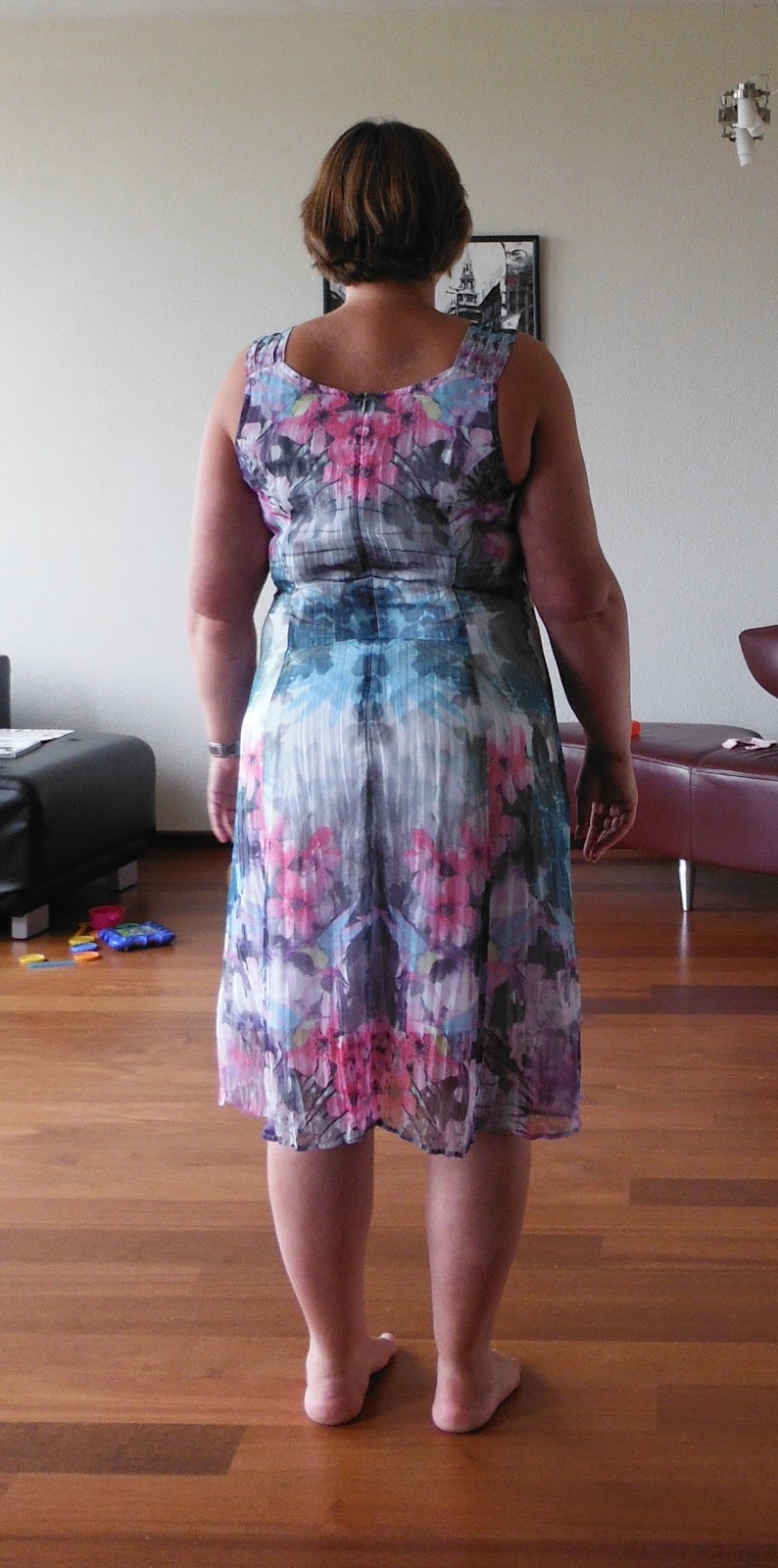
 I wanted a free flowing summer dress. One of those cute maxi dresses that are now out there. I love those and they have their obvious benefits. I had some trouble finding a nice one in my size. While roaming the largest department store in my town for THE dress, I stopped in my tracks. I spotted a lovely pink dress. Pink. In-your-face-kind-of-pink. As I zoomed in on the dress I spotted a 'safe' blue version as well. Not free flowing, not exactly wallflower-proof decor. What to do? I decided to try it on. I loved it! I admit, I also tried the 'safe' blue one. And decided against it. Same dress, same print, but just lost its appeal in navy blue. That's how I ended up with a more figure hugging dress.
Please excuse the wheat belly in this picture. Lately I've made one exception after another due to stress and a busy schedule. I'm paying the price. Nothing a good vacation can't fix: a good swim every day and all the time in the world to pick my food. If you look at this picture you probably wouldn't have guessed I have lipedema. However, I originally come from an early stage 2.
 The universe apparently intended to have a firm chat with me. The very week I decided I would dance the first opportunity that came along, I had a party. I had forgotten about that. Still, a promise is a promise. If you won't even keep a promise to yourself, what is left?
As it turns out they made it real easy. Totally my kind of dance music. Me and dance music go back a long way and it was pleasant to be reacquainted. If someone stared: I didn't notice. And I don't care!
 All these events took place in little over a week. I was beginning to feel more daring. On Lipese Challenge* I made another promise: for this vacation I would not dig up an outdated bathingsuit, nor doubt myself in front of a mirror whether I could 'pull it off'. No, I intended to get myself a nice new tankini.
I tried a few different ones and ended up with a model in a rather tight fit. Realistically I had to focus on keeping the girls secure and decent. I'm not exactly flat chested. That's how I ended up with this model. The legs...stick out, regardless of the fit on your body. For a split second I was in doubt about the bikini bottom. But when considering going one size up, they told me I would lose it swimming. The shop assistants were brutally honest (about the girls' tendency to escape, the fit really, not my legs or size) when trying on different models, so I took their word for it. Bright blue: can't miss me.
All it took was someone stirring things up and a few positive experiences. Just like that. I had a chance to sleep on it and I'm not the least bit sorry I got a dress and tankini that follow my contours. I know I picked the right items. My final challenge for self-acceptance was having my picture taken for this blog. That's still a sore point. See the criticism I put in on my waiste? Well, I saw it through and posted that picture. Also, I see what I'm doing here. I'm leaving the fussing in this blog. It's a nice marker of my progress and what the next step should be.
I hope June Awareness month 2013 will be a lesson to myself on a bad day or during a bad week. There will be moments like that again, too. When a shop assistant is less professional and kind enough to point out exactly those things you don't feel comfortable about. Or someone will stare and you notice. Or something else. I hope I will realize again it's them, not me. Like they are all perfect...
*Facebook group by Lipese
For June Awareness we initially set up a suggestion box. Of course we were free to throw in suggestions of our own and Maggie came up with promoting self-love. That one matters big time, so we stepped on it. Tirelessly Maggie came up with a new quote, picture or clip every day with a little exercise attached to it.
My wake-up call telling me I still have a long way to go with respect to self-acceptance came with the exercise to write down what we stopped doing because of lipedema. I wrote down 'dancing in public'. I immediately felt like an idiot. Why would you stop doing something you love to do, while physically still able to do it? Why? Because of people staring? What they might think? Because you don't like the attention. Oh, come on! Time to flip the switch.
 With my summer vacation booked I got ready or some serious R&R on the beach. So no drama about mentally getting ready. No: what does a woman need to make herself comfortable?
First a little something to read: Inferno by Dan Brown. But I also intend to bring my nerdilicious book on fossils. It's been collecting dust, but not by choice!
 Next I figured I needed a new mask and fins for some serious snorkling. My old mask was leaky and my old fins looked like I wrestled with sharks. Comes from using them to cross pebble beaches and get passed rocks, so nothing dramatic. Although I did swim around sharks a few times! I went for fabulous pink ones. I'll be very, very sorry to use them on pebble beaches!
 I wanted a free flowing summer dress. One of those cute maxi dresses that are now out there. I love those and they have their obvious benefits. I had some trouble finding a nice one in my size. While roaming the largest department store in my town for THE dress, I stopped in my tracks. I spotted a lovely pink dress. Pink. In-your-face-kind-of-pink. As I zoomed in on the dress I spotted a 'safe' blue version as well. Not free flowing, not exactly wallflower-proof decor. What to do? I decided to try it on. I loved it! I admit, I also tried the 'safe' blue one. And decided against it. Same dress, same print, but just lost its appeal in navy blue. That's how I ended up with a more figure hugging dress.
Please excuse the wheat belly in this picture. Lately I've made one exception after another due to stress and a busy schedule. I'm paying the price. Nothing a good vacation can't fix: a good swim every day and all the time in the world to pick my food. If you look at this picture you probably wouldn't have guessed I have lipedema. However, I originally come from an early stage 2.
 The universe apparently intended to have a firm chat with me. The very week I decided I would dance the first opportunity that came along, I had a party. I had forgotten about that. Still, a promise is a promise. If you won't even keep a promise to yourself, what is left?
 As it turns out they made it real easy. Totally my kind of dance music. Me and dance music go back a long way and it was pleasant to be reacquainted. If someone stared: I didn't notice. And I don't care!
 All these events took place in little over a week. I was beginning to feel more daring. On Lipese Challenge* I made another promise: for this vacation I would not dig up an outdated bathingsuit, nor doubt myself in front of a mirror whether I could 'pull it off'. No, I intended to get myself a nice new tankini.
I tried a few different ones and ended up with a model in a rather tight fit. Realistically I had to focus on keeping the girls secure and decent. I'm not exactly flat chested. That's how I ended up with this model. The legs...stick out, regardless of the fit on your body. For a split second I was in doubt about the bikini bottom. But when considering going one size up, they told me I would lose it swimming. The shop assistants were brutally honest (about the girls' tendency to escape, the fit really, not my legs or size) when trying on different models, so I took their word for it. Bright blue: can't miss me.
All it took was someone stirring things up and a few positive experiences. Just like that. I had a chance to sleep on it and I'm not the least bit sorry I got a dress and tankini that follow my contours. I know I picked the right items. My final challenge for self-acceptance was having my picture taken for this blog. That's still a sore point. See the criticism I put in on my waiste? Well, I saw it through and posted that picture. Also, I see what I'm doing here. I'm leaving the fussing in this blog. It's a nice marker of my progress and what the next step should be.
I hope June Awareness month 2013 will be a lesson to myself on a bad day or during a bad week. There will be moments like that again, too. When a shop assistant is less professional and kind enough to point out exactly those things you don't feel comfortable about. Or someone will stare and you notice. Or something else. I hope I will realize again it's them, not me. Like they are all perfect...
*Facebook group by Lipese
Subscribe to:
Posts (Atom)